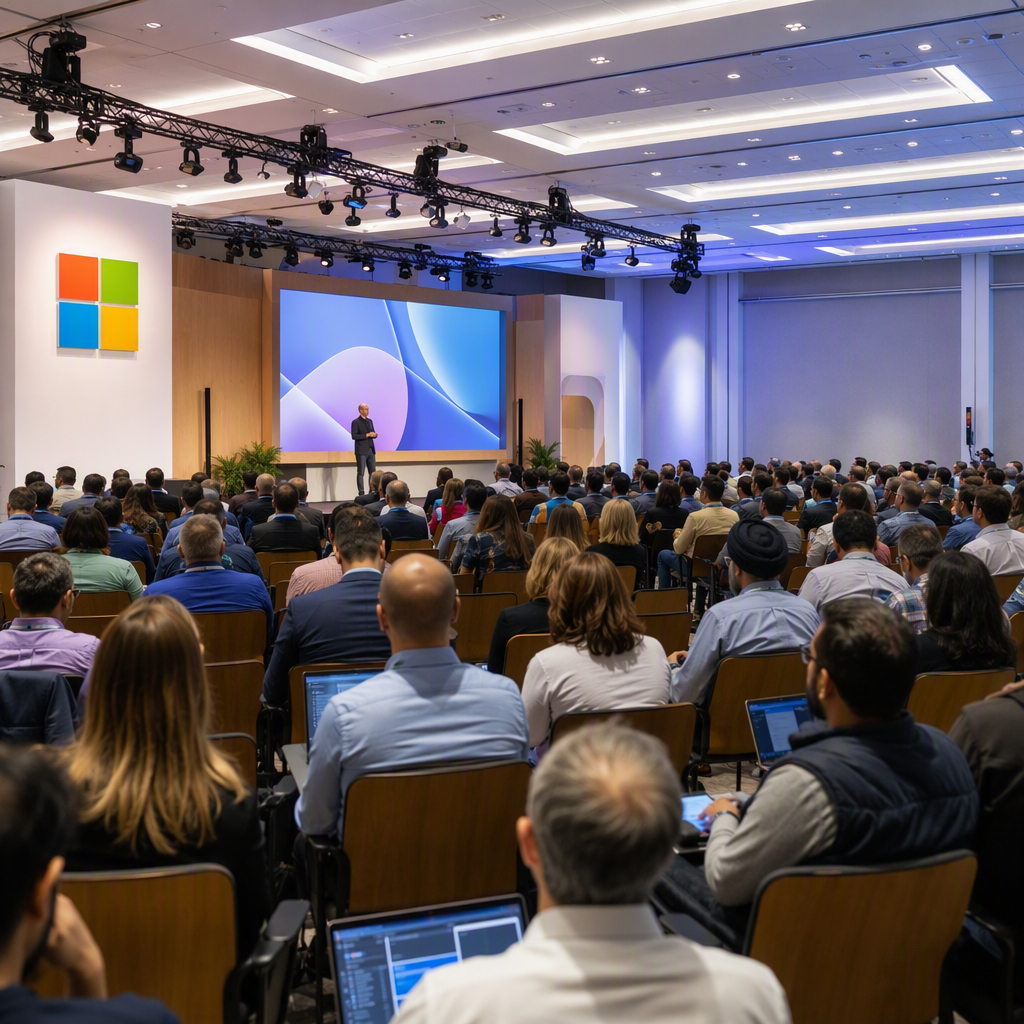
AI is changing work most usefully when it changes who makes a decision, how quickly it is made, and what work no longer needs to be repeated. That is the commercial test enterprises should bring to the Vancouver Microsoft 365 Summit, where our CEO will speak about the move from impressive demonstrations to practical operating capability.
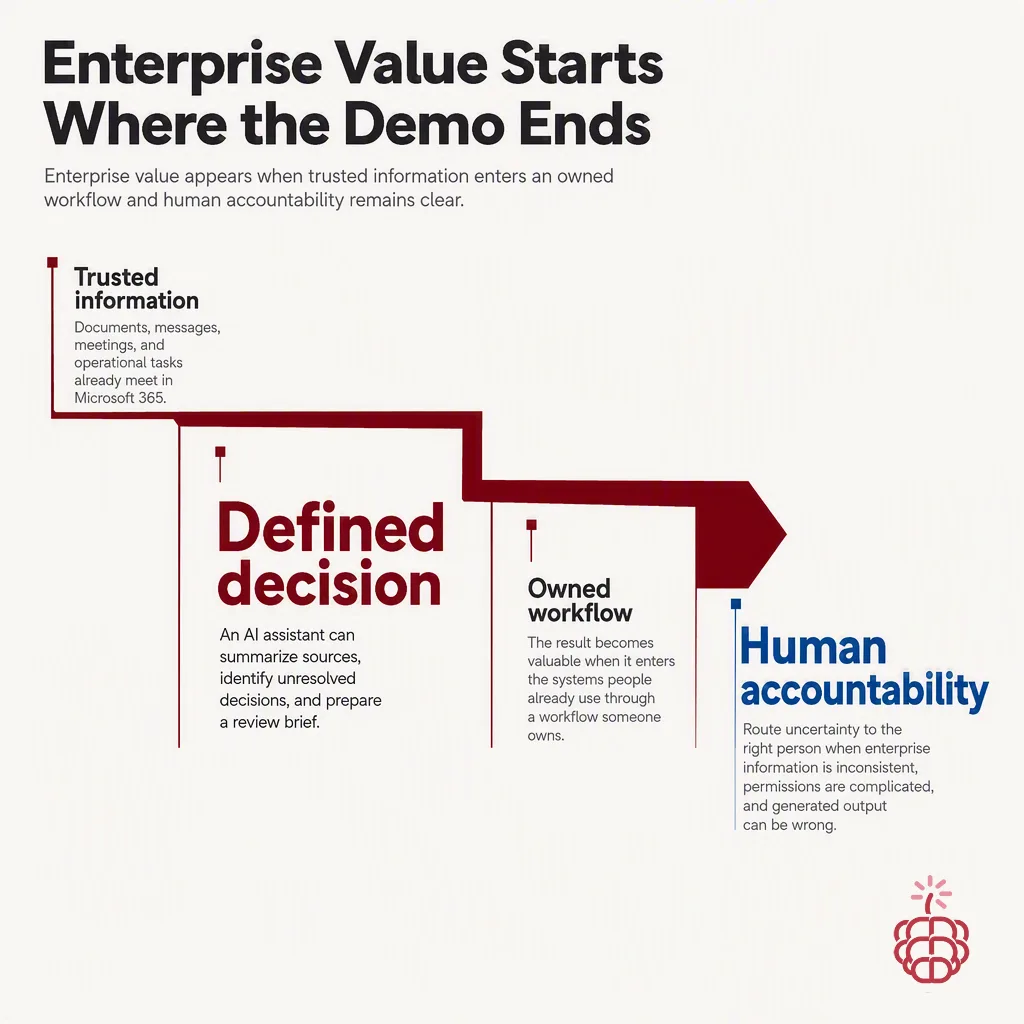
The pattern we keep seeing is that organisations are buying access to AI faster than they are changing the work around it. A Copilot prompt can produce a polished answer in seconds. That does not, by itself, improve a customer process, reduce risk, or increase capacity. The result becomes valuable only when it is connected to trusted information, a defined decision, and a workflow someone owns.
The model is not the bottleneck
This is why the difficult part is usually not choosing the most capable model. It is deciding where judgement sits, what evidence the system may use, when a person must review the output, and how the result enters the systems people already use. Microsoft 365 is an important setting for that work because documents, messages, meetings, and operational tasks already meet there. The opportunity is less about adding another destination and more about shortening the distance between information and action.
Consider an operations leader preparing a weekly review. Today, the work may involve searching meeting notes, finding the latest project documents, checking open actions, and asking several people to confirm what has changed. An AI assistant can summarize those sources, identify unresolved decisions, and prepare a review brief. The gain is not the summary. It is the time returned to the leader for resolving exceptions, assigning ownership, and deciding what should happen next.
That distinction matters as adoption spreads. If the assistant merely creates more drafts for employees to inspect, the organisation may add a new layer of work while believing it has removed one. If it prepares a reliable first view and routes uncertainty to the right person, it can reduce repetitive coordination and make management capacity available for higher-value decisions. The difference is workflow design, not presentation quality.
The strongest objection is valid: enterprise information is inconsistent, permissions are complicated, and generated output can be wrong. Those constraints make broad promises dangerous. They do not make the opportunity imaginary. They mean the first useful deployments should be narrow enough to govern, visible enough to measure through operating behaviour, and connected to decisions where human accountability remains clear.
That is the conversation the Vancouver Microsoft 365 Summit can support. Its focus on AI, Copilot, Microsoft workplace innovation, case studies, and practical exchange puts enterprise adoption in its proper context: a shared operating problem rather than a software purchase. For enterprises, the value of working with an experienced partner is not a louder technology message. It is help turning a promising capability into a controlled change in work.
AI has transformed what software can produce. The next transformation is organisational: deciding which produced work deserves trust, who acts on it, and how the business is redesigned around that judgement. The winners will not be the companies with the most convincing demonstrations, but those that make better decisions with less friction and keep responsibility visible.