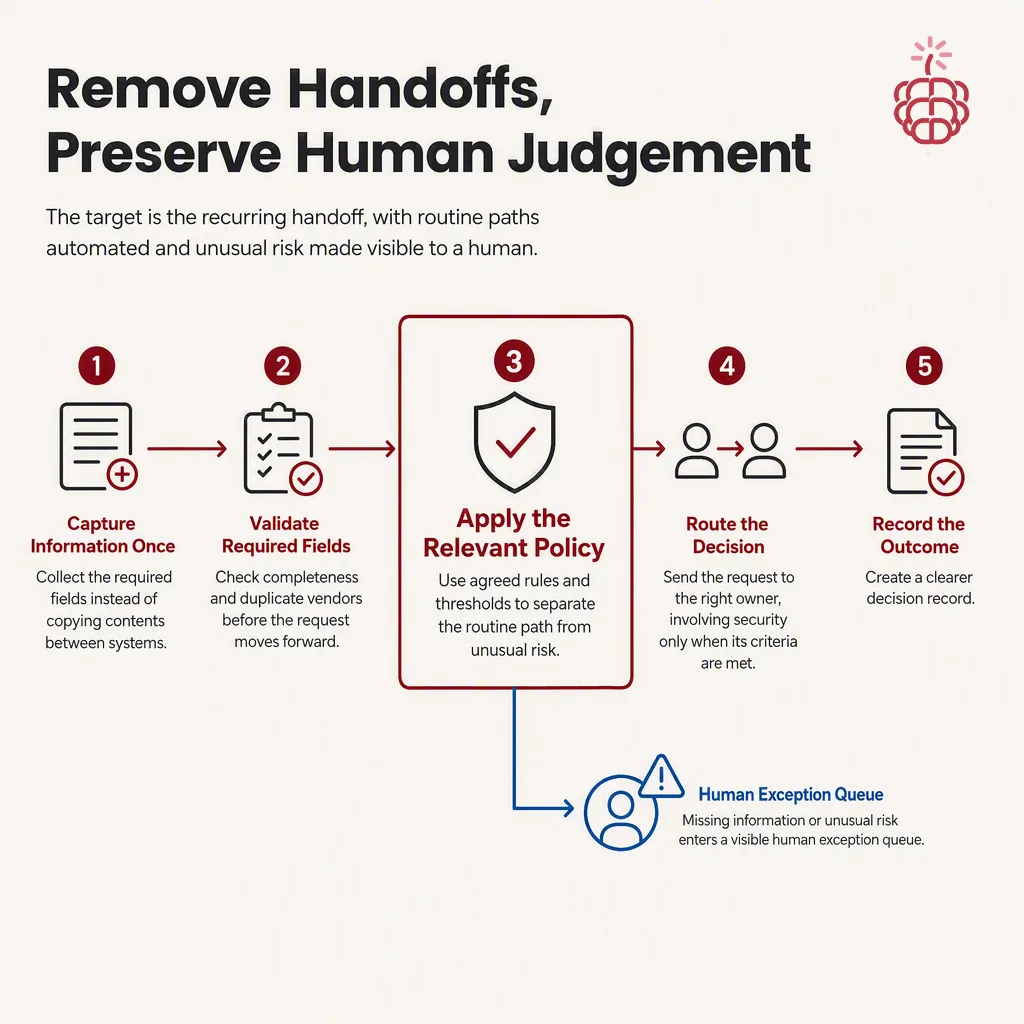
Manual work is a growth constraint when it sits between systems, people and decisions. The commercial decision is not whether to automate activity, but which recurring handoffs should disappear, which should be governed by rules, and where human judgement still earns its cost.
The pattern we keep seeing is deceptively simple: companies automate the visible task while preserving the invisible queue around it. A form replaces an email, but someone still copies its contents into the finance system. A report is generated automatically, but a manager still waits for three teams to confirm whether the numbers are reliable. The demonstration looks efficient. The operating capability is not.
That distinction matters because delay and error usually accumulate at the boundaries. Manual approval processes commonly involve buried requests, repeated data entry, unclear ownership and limited auditability, according to N-able’s review of digital process automation. Those are not separate annoyances. Together, they turn a small request into a chain of follow-ups that consumes capacity and makes the business slower to decide.
The better target is the handoff. Automation should capture information once, validate it, apply the relevant policy, route the decision to the right owner, and record what happened. If the request is ordinary and within an agreed threshold, the system can complete the routine path. If information is missing or the decision carries unusual risk, it should create a visible human exception rather than quietly guessing.
Consider a procurement manager handling software requests. Today, an employee submits a spreadsheet, the manager checks the budget, asks security for a review, waits for finance, and re-enters the result into a purchasing system. An automated workflow can collect the required fields, check for duplicate vendors, route security only when the request meets its criteria, and send an approved order forward. The gain is not that one person types faster. It is that the procurement manager spends time on exceptions, supplier decisions and spending control instead of chasing status.
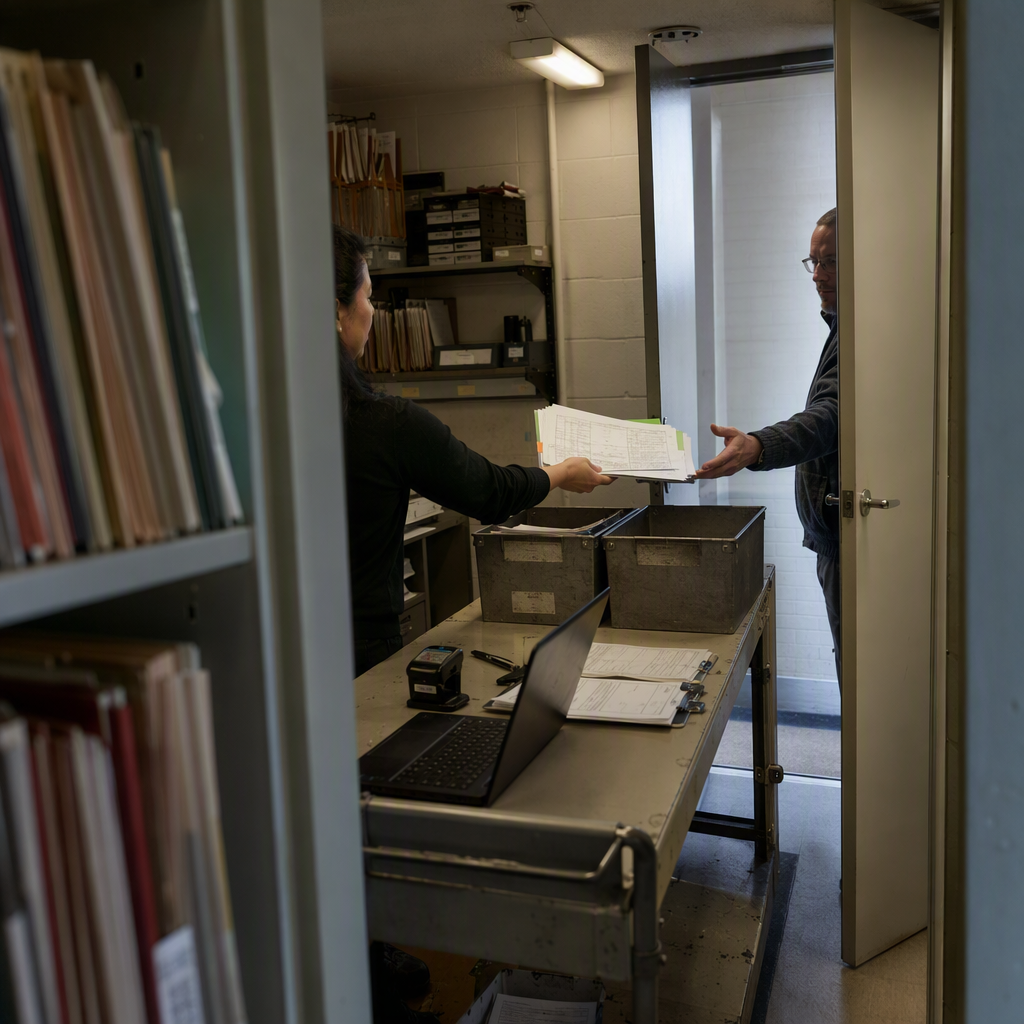
This is where the consequence becomes larger than labour saving. A structured workflow creates a clearer record of how decisions are made. That can reduce rework, improve reporting and make controls easier to test. It also exposes a hard truth: many “manual tasks” exist because the organisation has never agreed on the rule behind them. Automation does not remove that ambiguity. It makes the ambiguity impossible to ignore.
The strongest objection is that automation can make a bad process faster. It can also move errors into systems of record, where they become harder to see. That risk is real. Practical guidance on automated workflows recommends narrow starting points, required fields, confidence thresholds, validation and a human queue for ambiguous cases. The first workflow should therefore be chosen for clear rules and measurable consequences, not for novelty.
Our view is that automation is less a headcount strategy than an allocation strategy. It decides whether skilled people spend their scarce attention on routine movement or on judgement. The organisations that benefit most will not be those with the most automated steps. They will be those that redesign ownership around the decisions that remain.
That changes the question leaders should ask. Not “What can we automate?” but “Where is the business paying people to compensate for a process that never made its rules explicit?” The answer points to capacity that already exists, but is trapped in the workflow.