
Enterprise AI projects often stall before the model becomes the problem. The friction sits in adoption: new logins, unfamiliar interfaces, duplicated data and another system for IT to govern. Putting AI inside the Microsoft tools employees already use can reduce that friction and shorten the path from demonstration to daily work. But it changes the decision leaders must make: not whether to replace the stack, but which decisions and workflows deserve to run within it.
The attraction is practical. Microsoft 365 already contains the conversations, documents, meetings and permissions that shape many administrative decisions. Microsoft’s own guidance describes agents that can connect to organisational data, automate tasks and support business processes, while administrators manage access, deployment and lifecycle. That makes the existing environment a useful operating boundary, not just a distribution channel.
The pattern we keep seeing is that “nothing gets ripped out” is treated as the whole strategy. It is not. Keeping the stack can remove migration cost while leaving the harder work untouched: deciding what the agent may do, who owns its output, what evidence it must show and when a person must intervene.
Consider a procurement team handling supplier renewals. An agent inside Teams and Outlook could find the relevant contract, summarize changed terms, identify missing approvals and prepare a recommendation for the category manager. The visible benefit is speed. The material benefit is different: the manager spends less time reconstructing context and more time deciding whether the commercial risk is acceptable. The workflow has changed without requiring employees to abandon the tools where the work already happens.
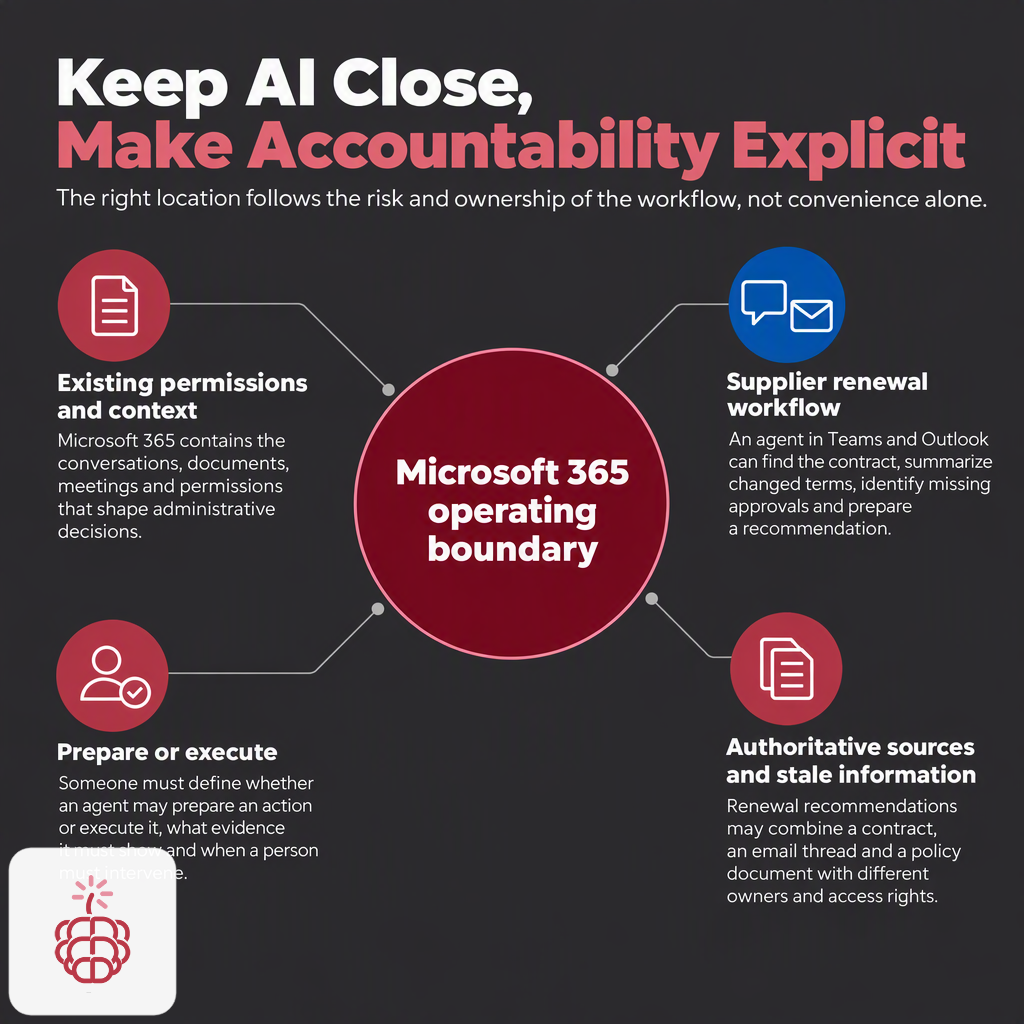
That example also shows why integration alone is insufficient. A renewal recommendation may combine a contract, an email thread and a policy document with different owners and access rights. Microsoft’s Copilot APIs are designed to retrieve work content while respecting access controls and support interaction export for compliance use cases. Those capabilities reduce exposure, but they do not settle the business policy. Someone still has to define which sources are authoritative, how stale information is handled and whether an agent can prepare an action or execute it.
The strongest objection is that embedding AI in familiar software can make weak automation look trustworthy. Familiarity lowers resistance, but it can also hide complexity. A polished answer in Outlook is not evidence that the underlying decision is sound. In some cases, a separate application with stricter controls will be the safer choice.
Our view is therefore narrower and more useful: keep AI close to the work, but make accountability more explicit than it was before. Microsoft’s extension model itself distinguishes between experiences inside Microsoft 365 and applications or custom agents that teams host and operate, with different responsibilities for identity, deployment, distribution and governance. The right location follows the risk and ownership of the workflow, not convenience alone.
This reframes “inside the tools you already pay for.” The commercial advantage is not avoiding replacement. It is turning existing permissions, context and habits into capacity, provided the organisation is willing to name the decisions the system may influence. The technology shift is therefore also an ownership shift: from buying another interface to governing a new participant in the work.